
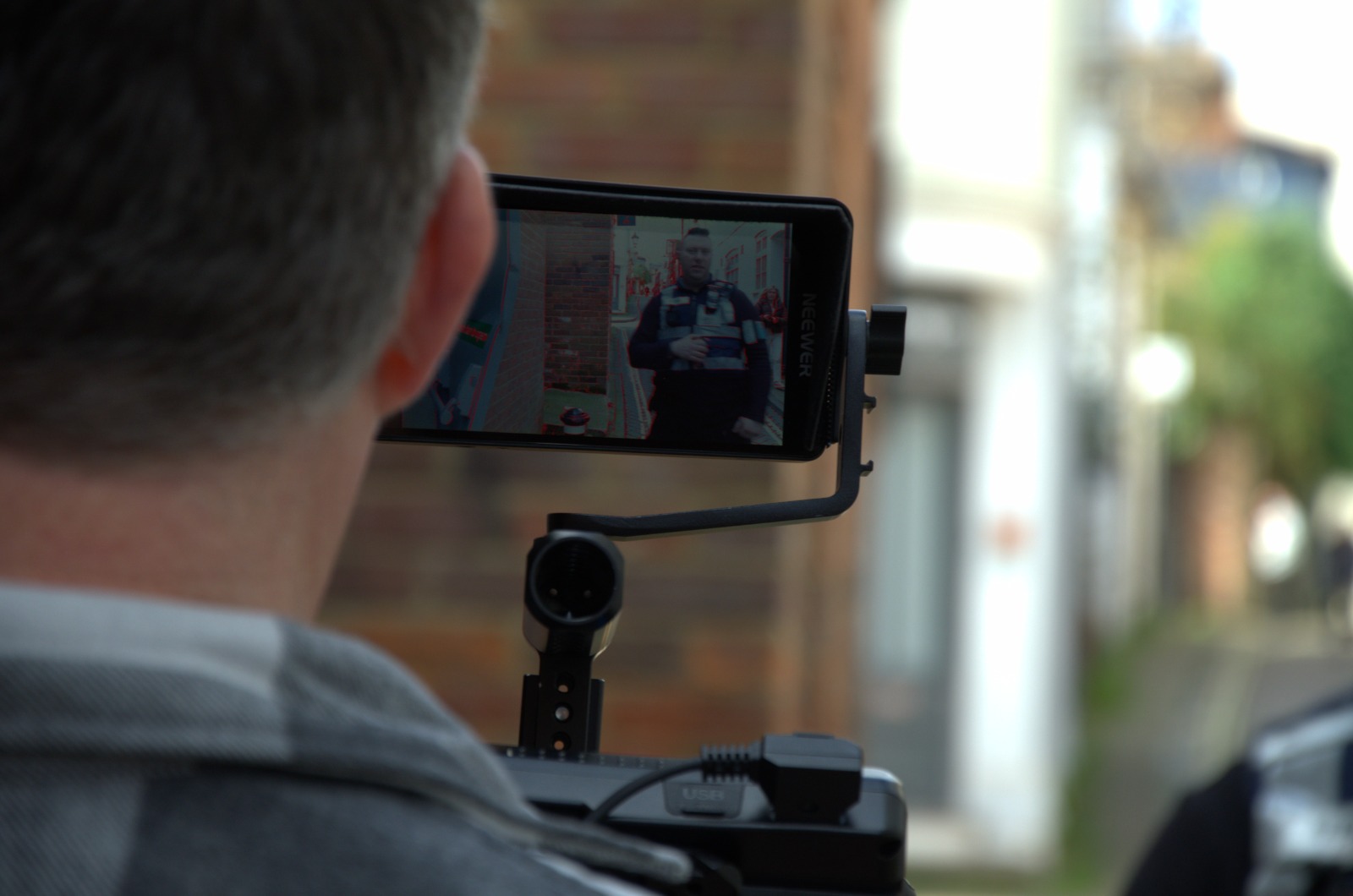
Social media is fuelling a rise in organisations facing a relatively recent kind of disruptive visitor, commonly referred to as a ‘social media auditor’.
These are individuals who attend premises and public spaces to film staff, property or activities, with footage often being uploaded to social media. Some deliberately seek engagement or provocative reactions from staff in order to generate controversial online content.
These social media auditors, also sometimes referred to as hostile auditors or citizen journalists, are becoming a growing challenge for UK businesses. Understanding how to respond safely, legally and confidently is therefore essential for modern security and risk management.
Here at Venture Security, we support businesses to handle social media auditors in a way that is designed to protect their people, their operations and their brand integrity. In this blog, we share national guidance and best practice for managing this type of incident.
How businesses can prepare for social media auditors
Preparation is the strongest defence for any business and that starts long before a social media auditor is on site.
The first step is to create a short, written procedure based on the CALM model, which is a behavioural framework designed by the UK’s National Protective Security Authority (NPSA) to help staff respond safely and professionally to social media auditors or citizen journalists. This will give staff a simple framework to follow and ensure consistency across the team.
The basis of the CALM model is the following:
- Chat – Engage in a friendly and professional manner.
- Assess – Establish their apparent intent while remaining alert to any wider security concerns.
- Limit – Keep further interaction to what is necessary.
- Monitor – Continue to observe for signs of escalation or wider hostileintent.
As a sensible organisational policy, businesses may wish to nominate trained individuals to manage any engagement. Other employees should know how to report suspected auditor activity and should not feel obliged to challenge or debate with someone who is filming.
Preparation is Key
Front facing teams such as receptionists, loading bay staff, contractors and anyone entering through exposed access points should be briefed on how to behave if they notice someone filming. They should know that the organisation’s strategy is based on calm observation rather than confrontation. They should also understand that they must not discuss security systems, staffing levels, blind spots, shift patterns or response procedures under any circumstances.
Businesses should take time to clarify exactly where public space ends and private property begins. Clear signage, boundary markings and physical barriers help prevent misunderstandings and make it easier to withdraw permission to remain if necessary. At the same time, organisations should review what can be seen from public areas. Screens, visitor books, passes, whiteboards, vehicle details, access codes and control rooms should not be visible to anyone standing outside or in publicly accessible areas.
Social media auditors often look for complacency to embarrass companies, so reducing visible vulnerabilities is an important preventative step.
CCTV and incident reporting systems should be checked regularly to ensure they are fully operational. Any immediate danger should prompt a 999 call, while appropriate non-emergency concerns can be reported to police via 101.
Because social media auditors frequently publish footage online, organisations should prepare a communications response in advance. This helps avoid impulsive arguments in comment sections and ensures any public messaging is calm, factual and consistent.
How to respond when a social media auditor arrives on site
When confronted by a social media auditor, the organisation’s goal should be to remain calm, avoid escalation and ensure safety.
If the individual is on public land…
The business should generally allow the filming and avoid unnecessary engagement. The nominated representative may make a brief and friendly enquiry such as “Hello. I am the duty manager. Can I help you with anything?”. This short interaction acknowledges the person’s presence without providing the reaction they are seeking.
After this initial contact, the representative should explain that the person has been noticed and then assess their behaviour.
- Don’t assume that the filming indicates hostile intent
- Avoid demanding identification or an explanation where there is no legal requirement to provide one
- Never claim that photographing a building or employees from public land is illegal.
If no threat is identified, the encounter should be kept brief and the representative should disengage. They should continue to monitor the situation from a reasonable distance or through CCTV.
If the individual is on business property…
The response will depend on the nature of the space.
Some areas such as shops, receptions or forecourts carry an implied invitation to enter. However, if filming is contrary to the organisation’s conditions or the person enters a clearly restricted area, staff should calmly identify the boundary or condition, politely withdraw permission for the person to remain, and ask them to leave by a specified route.
You must not touch the camera, obstruct the lens or demand deletion of footage. Instead, follow the organisation’s existing trespass and access control procedures.
Ordinary trespass is generally a civil matter rather than a criminal offence. If someone on private property is asked to leave and refuses, the organisation should follow its trespass and access-control procedures. Police involvement may be appropriate where there are concerns about criminal activity, safety or hostile reconnaissance. This could include circumstances involving threats, criminal damage, harassment or aggravated trespass. Call 999 where there is an immediate risk or a crime may be taking place. For non-emergency concerns or advice following an encounter, contact police on 101.
Employees who are approached individually should be given a simple and consistent phrase to use. They should say something like, “I am not authorised to comment. Please speak to the duty manager.” They should then enter the premises without arguing. If the auditor follows them, blocks their path, threatens them or persistently targets them, the organisation should record and assess the conduct separately. Depending on the circumstances, behaviour involving threats, harassment or other unlawful conduct may justify police involvement.
Once any necessary initial engagement has taken place, unnecessary further interaction should be avoided. Keeping exchanges brief, professional and uneventful reduces the opportunity for confrontation while allowing the organisation to continue monitoring for genuine security concerns.
Monitoring from a distance, reporting internally and intervening only when safety or safeguarding protocols require it can help keep the situation calm and controlled.
How to document a social media auditor incident
Once the auditor has left, the organisation should create a professional and objective incident record.
This report should include the date, time and exact location of the incident, whether the individual remained on public land, what was filmed or examined, and the words and behaviour used by both parties.
Any attempt to enter restricted areas should be noted, along with descriptions, vehicle details or drone activity. Relevant CCTV or body-worn footage should be preserved according to normal evidence and data retention procedures. If the auditor voluntarily discloses the name of a social media channel, this can be included in the report, along with the reasons for contacting or not contacting police.
Objective reporting is crucial. Staff should record only what they observed, not their opinions or assumptions. For example, instead of writing that the auditor was trying to cause trouble, they should describe the specific actions they saw or heard. Accurate, factual reporting provides a reliable record of what happened. It can also help protect the organisation if footage is later published online or the incident is subsequently challenged.
If the incident appears harmless, businesses should avoid retaining excessive personal information indefinitely. Data should only be kept for as long as necessary under normal retention procedures.
When social media auditor behaviour becomes a security threat
Not all filming is harmless.
Escalation should be based on behaviour rather than the presence of a camera. Attempts to defeat or test access controls, covert attention to security systems or vulnerable points, persistent interest in sensitive assets, distraction tactics, following or threatening employees, criminal damage, refusal to leave clearly private restricted space, suspicious repeat visits, coordinated activity or unsafe drone flights, can all indicate a more serious threat.
Any immediate danger should prompt a 999 call, while appropriate non-emergency concerns can be reported to police via 101.
Common mistakes businesses make when dealing with social media auditors
Even well‑intentioned staff can accidentally escalate a social media auditor encounter. Some of the most frequent mistakes include:
- Arguing or confronting the auditor. Engaging emotionally or defensively provides exactly the reaction the auditor is trying to capture.
- Incorrectly claiming that filming is illegal. Saying “You can’t film here” or “You need permission to record” are often inaccurate when the person is on public land and can lead to reputational damage when footage is shared online.
- Touching cameras or blocking lenses. Physical interference can be portrayed as aggression and may expose staff or the organisation to complaints.
- Oversharing operational details. Discussing security systems, staffing levels, access points or procedures can create vulnerabilities.
- Failing to withdraw permission clearly on private property. Staff sometimes hesitate to ask someone to leave, which can prolong the interaction and increase risk.
- Not recording the incident properly and objectively. Missing details such as time, location, behaviour, or attempts to enter restricted areas can weaken the organisation’s ability to respond if footage is later published.
- Calling police too early or too late. Over‑reacting can escalate the situation, while under‑reacting can leave staff unsupported. Escalation should always be based on behaviour, not the presence of a camera.
By avoiding these common mistakes and following the CALM model, organisations can better maintain control.
In summary
Managing social media auditors can be challenging but organisations can significantly reduce the potential impact by preparing staff, establishing clear protocols and promoting a culture of calm professionalism.
When employees understand that they are not expected to challenge auditors or justify organisational policies, they will feel more confident and are less likely to react out of frustration or uncertainty. Professionalism becomes a protective shield that can prevent escalation, while safeguarding both people and brand reputation.
If your organisation would benefit from expert security consultancy on managing hostile behaviour on site, our team at Venture Security would be delighted to help. Please get in touch to find out more – [email protected]
Frequently asked questions about social media auditors
What is a social media auditor? A social media auditor is someone who films premises, staff or activities, usually with the intention of publishing the footage online. Some deliberately seek engagement or provocative reactions from staff to create controversial content.
Is filming from public land illegal? No. Filming from public land is generally lawful, which is why calm, professional responses are essential.
How should businesses respond to social media auditors? Follow the NPSA CALM model based on the framework of Chat, Assess, Limit, Monitor.
Why do social media auditors target certain businesses? Social media auditors often choose locations where they believe staff may be unprepared or reactive. They typically look for sites with visible activity, security presence, or public‑facing operations, as these environments increase the likelihood of capturing a strong reaction on camera.
Why might a social media auditor try to provoke a reaction? Some auditors seek confrontation, confusion or frustration because these reactions can create dramatic footage that attracts views, followers or advertising revenue when shared online.
Are social media auditors allowed to film staff without permission? Generally, a person standing in a public place can photograph or film people and property visible from that location without obtaining permission. However, other laws may apply depending on the circumstances and the person’s behaviour.
When does filming become unlawful? Filming from a place where someone is entitled to be is generally lawful, but other behaviour associated with it may not be. Threats, harassment, criminal damage, certain forms of trespass and some unsafe or unlawful drone activity may constitute criminal offences.
Can businesses stop someone filming on private property? Yes. Businesses can set conditions of entry and withdraw permission to remain if those conditions are breached. Staff should calmly identify the boundary and ask the individual to leave via a specific route, without touching cameras or attempting to delete footage.
Is trespass a police matter? Ordinary trespass is generally a civil matter rather than a criminal offence. If someone on private property is asked to leave and refuses, the organisation should follow its normal trespass and access-control procedures. Police involvement may be appropriate where there are concerns about criminal activity or safety, for example threats, violence, criminal damage, harassment or certain forms of aggravated trespass.
You may also be interested in: